Château de Madame de Rosemonde
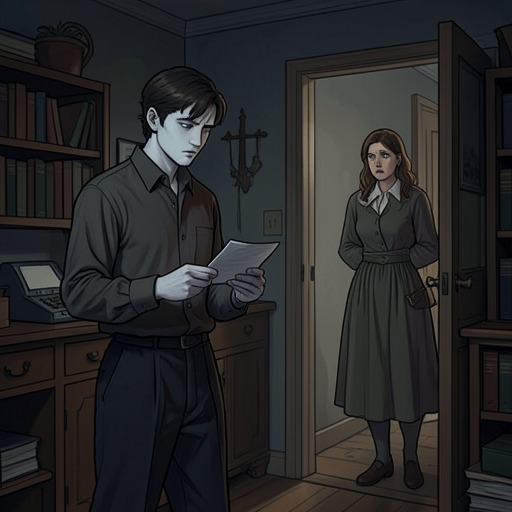
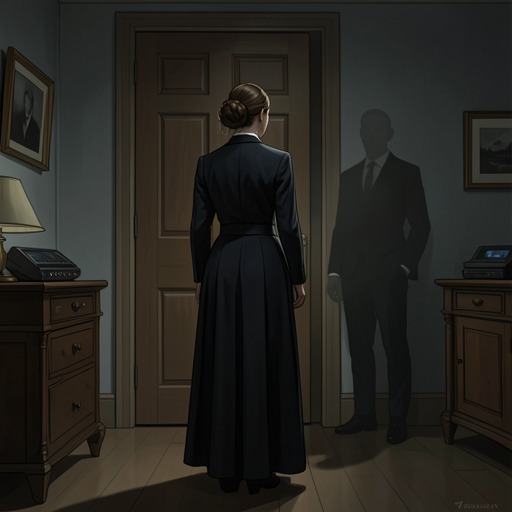
Les liaisons dangereusesChâteau de Madame de Rosemonde is the secluded country residence where the Vicomte de Valmont pursues Madame de Tourvel while she is staying with his aunt, Madame de Rosemonde. Removed from Paris and the watchfulness of ordinary society, the estate becomes both a refuge for Tourvel and a stage for Valmont: he turns rural charity, religious observance, and domestic hospitality into instruments of courtship, while the letters that describe the place expose the distance between his performance and his intentions.
Setting and Occupants
Madame de Tourvel comes to the countryside for the duration of her husband's absence in Bourgogne, where he is attending a major lawsuit. She expects to spend the time in the company of Madame de Rosemonde, whose memory and gaiety remain lively despite her age: her body is said to be eighty-four, while her mind seems twenty. The retreat's routine is pious and quiet. Tourvel attends mass, visits the poor, prays morning and evening, takes solitary walks, and has religious conversations with her hostess.
The Vicomte de Valmont's presence alters that routine. He is Madame de Rosemonde's nephew, and Tourvel initially knows him chiefly by his disreputable reputation. In the countryside, she thinks, he appears more reasonable: he speaks readily of his faults, listens to her severe admonitions, and promises better conduct. She treats his stay as a brief interruption of his usual life, doubting that a return to Paris would leave his reform intact. He, by contrast, privately describes his first days at the estate as the beginning of an intense passion, intensified by solitude and by the obstacles Tourvel presents.
A Retreat Turned into a Stage
Valmont's first conspicuous maneuver at the estate is to arrange aid for a poor family whose furniture is about to be seized because they cannot pay the taille. He carefully checks that the household contains no young woman whose age or appearance might make his charity seem self-interested, then announces that he plans to go hunting. Tourvel tries to dissuade him, citing the heat, the likely exhaustion, and the futility of the outing. Valmont persists, interpreting her objections as signs of concern and fearing that her delicacy might otherwise frustrate his plan.
At daybreak he sets out with a watcher following him. He leads the man across fields toward the village, even making him run after him, before continuing to the family he intends to help. The visit allows the charitable deed to be witnessed and reported. When the women return to the estate after seeing the family, Madame de Rosemonde does most of the talking; Tourvel and Valmont, both preoccupied with what has occurred, answer only briefly. Valmont has deliberately helped bring about this quiet between them. When they descend from the carriage, Madame de Rosemonde withdraws to her own apartment, leaving the two alone in a poorly lit salon. The household's hospitality thus creates the privacy he has been engineering.
Piety, Persuasion, and Concealed Motives
The estate's religious atmosphere gives Valmont a language for disguising his pursuit. After the charitable visit, Tourvel asks how someone capable of doing good can spend his life doing wrong. He answers by presenting his conduct as susceptible to influence: he says he has followed the example of immoral companions and is now trying to imitate the virtues around him. He then recasts his assistance to the family as an effort to please Tourvel, claiming that he sought not praise for himself but a way to honor the woman he adores. His apparent confession borrows the vocabulary of candor even as it reveals that the charity was designed to affect her.
Madame de Rosemonde's trust reinforces the performance. She is pleased to see her nephew regularly attend prayers and mass, unaware that he privately imagines a different object of worship. Tourvel likewise hopes that his promises and her sermons may amount to a conversion, though she remains doubtful that a few days in the country can change the habits he resumes in Paris. The estate's pious customs are therefore not merely background: they furnish the contrast through which Tourvel interprets Valmont as a possible penitent and through which his letters reveal the calculated nature of that appearance.
Narrative Role and Significance
The château's significance lies in the way its seclusion reshapes social behavior without removing the characters from social scrutiny. Valmont knows he is being watched, and makes the watcher part of his charitable display; at the same time, the house's familiar rhythms and Madame de Rosemonde's presence lend him the respectability of family life. The same setting accommodates public virtue and private calculation, often within a few steps of one another: a visit to a family in need is followed by a carefully produced moment alone with Tourvel.
The location also anchors the novel's epistolary contrasts. Tourvel writes of Valmont as a man who seems better than his reputation and may be reformed, while Valmont's account to the Marquise de Merteuil details how he has arranged appearances and read Tourvel's responses for signs of desire. The estate is thus known through competing interpretations rather than an architectural description. It is a lived retreat of prayers, visits, walks, and card games, but also a temporary theater in which Valmont turns each of those circumstances toward conquest. The irony is sharpened by the novel's prefatory skepticism about stories of a wealthy young woman entering religion and a young, beautiful president dying of grief: the enclosed country world becomes the setting for precisely the kinds of extremity that the skeptical voice claims its own age could not produce.